The short answer
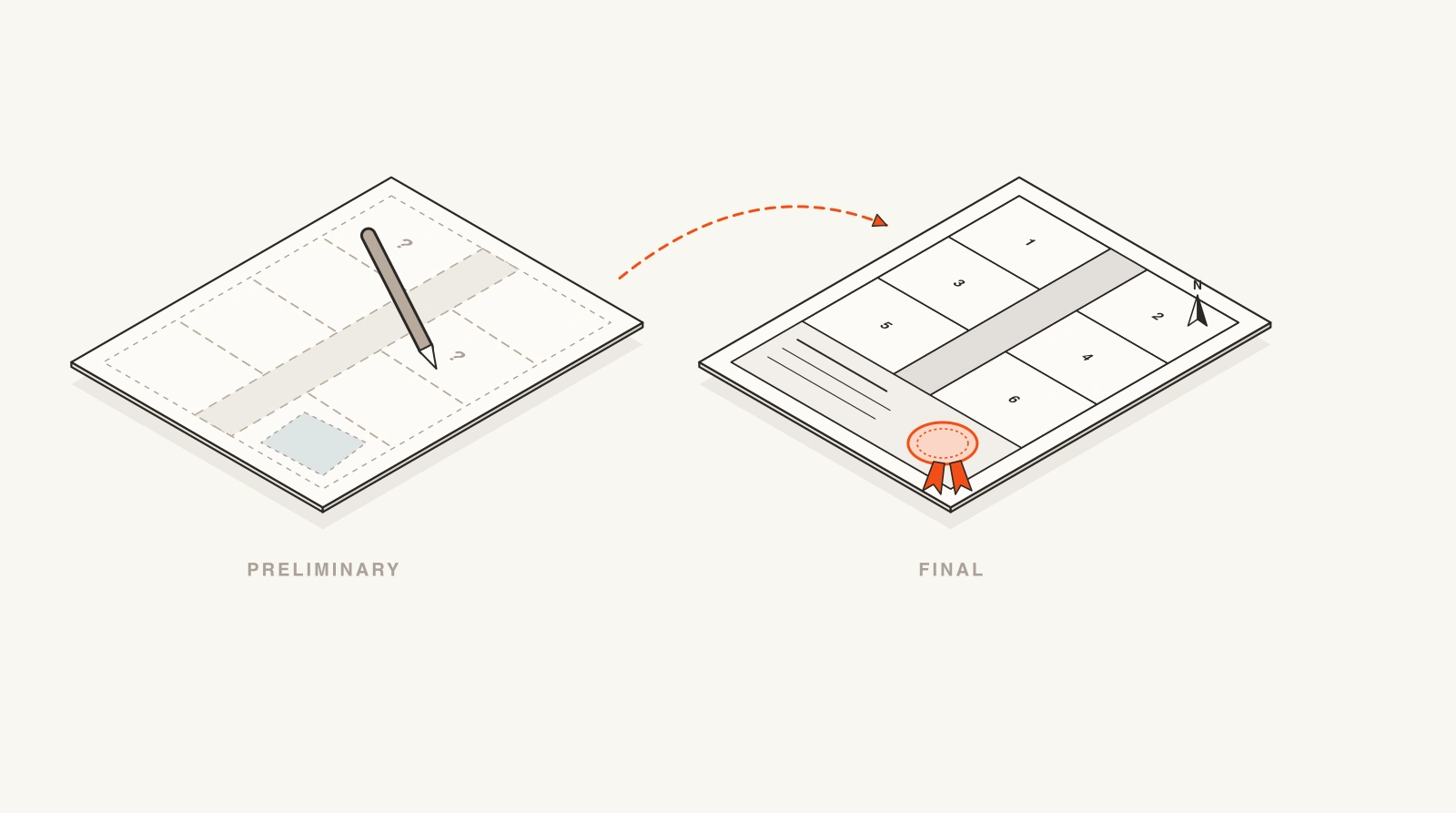
A preliminary plat is the approved design of a subdivision: the lot layout, streets, easements and drainage plan. It lets the developer move on to detailed engineering, but it isn't recorded and no lots can be sold from it.
A final plat is the exact, surveyed legal document. It's signed, approved and recorded with the county clerk, and recording it is what creates the lots. Only then can lots be sold and building permits issued.
Side by side
- Purpose: the preliminary plat settles the design; the final plat creates the lots as a matter of record.
- Precision: the preliminary is a design drawing, and dimensions can still shift; the final has exact bearings, distances, lot areas and monuments.
- Recorded? The preliminary plat is an approval, not a recorded document. The final plat is recorded with the county clerk.
- What it allows: the preliminary allows engineering plans and, in many places, construction of streets and utilities; the final allows lot sales, lot financing and building permits.
- Review: the preliminary gets the full design review by planning, engineering, utilities and fire; the final is checked against the approved preliminary.
- Changes: the preliminary is routinely revised during engineering; once recorded, the final can only change through a replat or amending plat.
- Lifespan: a preliminary approval typically expires if no final plat follows within the period set by the local ordinance; a recorded final plat stands until it's replatted.
What happens between the two
The gap between preliminary and final approval, often 6 to 18 months on a large subdivision, is when the subdivision itself gets built:
- 1
Engineering plans
Civil engineers turn the approved layout into construction drawings: paving, storm sewer, water and sanitary lines, grading and detention. The city reviews these separately.
- 2
Streets and utilities
Contractors build the streets, drainage, water, sewer and dry utilities. This is when excavation, paving and utility crews are hired, before any house has a permit.
- 3
Inspection and acceptance, or a bond
The city or county inspects the work. Most require the improvements to be finished and accepted, or guaranteed with a bond or other financial security, before the final plat can be approved.
- 4
Final plat approval and recording
The final survey is checked against the preliminary, signatures and tax certificates are collected, and the plat is approved and recorded. Now the lots exist, and house permits can follow.
Why a preliminary plat matters in Texas
Texas has a vested rights law, Local Government Code Chapter 245. In general, filing the first permit application for a project, which can be a preliminary plat, locks in the rules in effect on that date for the project, so a city usually can't apply later regulation changes to it while the project stays active. That's one reason developers file preliminary plats early.
Texas also put plats on a clock in 2019: once a complete application is filed, the city or county must approve, conditionally approve or deny it within 30 days. That applies at each stage, so a subdivision that goes through both a preliminary and a final plat runs the clock twice. More on that in the platting process.
When there's only one plat
Not every subdivision needs both. Small plats with no new streets, replats of a few lots, and amending plats usually go straight to a single recordable plat. The two-step process is mostly for larger subdivisions with new streets and utilities.
Houston works this way too: most plats go through one Planning Commission action on the regular two-week cycle, and the preliminary/final split matters mainly for large master-planned communities. You can see what's on recent agendas on our Houston plats page.
Plats on recent Houston agendas
New subdivisions and commercial reserves from recent Houston Planning Commission agendas, with lot counts and acreage.
- 661
- plats on the agenda, last 90 days
- 6,620
- lots proposed
- 26,655
- acres platted
- Haddick PlaceDec 3, 20263 lots · 0.29 ac · Single Family Residential (Public Street) · East Houston
- ARG Chetti HoldingsDec 3, 20261.20 ac · Commercial · 77406
- Reserve at Spring BranchDec 3, 202670 lots · 4.65 ac · Landscape or Open Space; Residential Guest Parking; Single Family Residential (PAE 1/PAE 2) · Spring Branch Central
- Morse Street ViewsDec 3, 20262 lots · 0.11 ac · Single Family Residential (Public Street) · Neartown - Montrose
- Northwest Place Partial ReplatDec 3, 202614.71 ac · Unrestricted · Fairbanks / Northwest Crossing
- Spring Dell DevelopmentDec 3, 20260.61 ac · Unrestricted; Commercial · 77388
What each stage tells builders and trades
A preliminary plat approval is the earliest public commitment to a specific subdivision. It points to site work within months and houses within a year or two. A final plat recording points to building permits within weeks to months. Watching both gives two chances to get in front of the same project: site contractors at the preliminary, and home trades and suppliers at the final.
Once permits start, they show up on the permit map and the Houston city page.
groundranger Pro
Get new plats and permits by email
Everything above, checked for you every morning. Pick your ZIP codes and the kind of work you want, and we email you new filings with the owner, contractor and design firm already attached.
Questions
What is the difference between a preliminary plat and a final plat?
A preliminary plat approves a subdivision's design (lot layout, streets, easements and drainage) and isn't recorded. A final plat is the exact surveyed document that's recorded with the county clerk, and recording it legally creates the lots.
Can you build after preliminary plat approval?
Often you can build streets, drainage and utilities once the preliminary plat and engineering plans are approved. Building permits for houses or buildings generally wait for the recorded final plat.
How long between preliminary and final plat?
Often 6 to 18 months on a large subdivision, mostly because streets and utilities have to be built, or bonded, before the final plat is approved.
Does a preliminary plat expire?
Usually, yes. Local ordinances set how long a preliminary approval lasts if no final plat is filed, and many allow extensions.
Can lots be sold after preliminary plat approval?
Generally not. Lots can't be sold by reference to an unrecorded plat. Builders often sign contracts to buy lots that close when the final plat is recorded.
Does every subdivision need both?
No. Small plats, replats and amending plats usually go straight to a single final plat. The two-step process is for larger subdivisions with new infrastructure.